
Reflections from the Australia-Papua New Guinea Emerging Leaders Dialogue 2026
Earlier this month, I had the opportunity to take part in the Australia–Papua New Guinea Emerging Leaders Dialogue in Cairns, held from 5–9 May 2026. I was one of 19 delegates selected from across Australia and PNG to participate in the program, which this year explored the theme of “Bilums to Boardrooms: The Business of Australia–Papua New Guinea Relations.” Across the week, discussions focused on business relationships, trade and investment, small and medium enterprises, economic development and emerging market opportunities shaping the future of the bilateral relationship.
One thing became very clear to me throughout the Dialogue is that Australia–PNG relationship is far deeper than political personalities or foreign aid. It is personal, economic, cultural and regional partnership essential to the region’s security. This has become even more significant now that Australia and Papua New Guinea have elevated their relationship to a formal Alliance through the Pukpuk Treaty, marking a historic step in the defence and security relationship between both countries. Again and again, speakers highlighted that this relationship is built on people-to-people connections, family ties, business links and shared interests across the Pacific.
There were many conversations around trade, investment and economic integration. Queensland’s relationship with PNG was a major focus, particularly the role Cairns plays as a gateway to the Pacific. I was surprised by how many PNG business leaders, government officials and families already have strong links to Cairns. Several speakers even described Cairns as PNG’s “second capital city” because of the movement of people, healthcare, education and business between the two places.
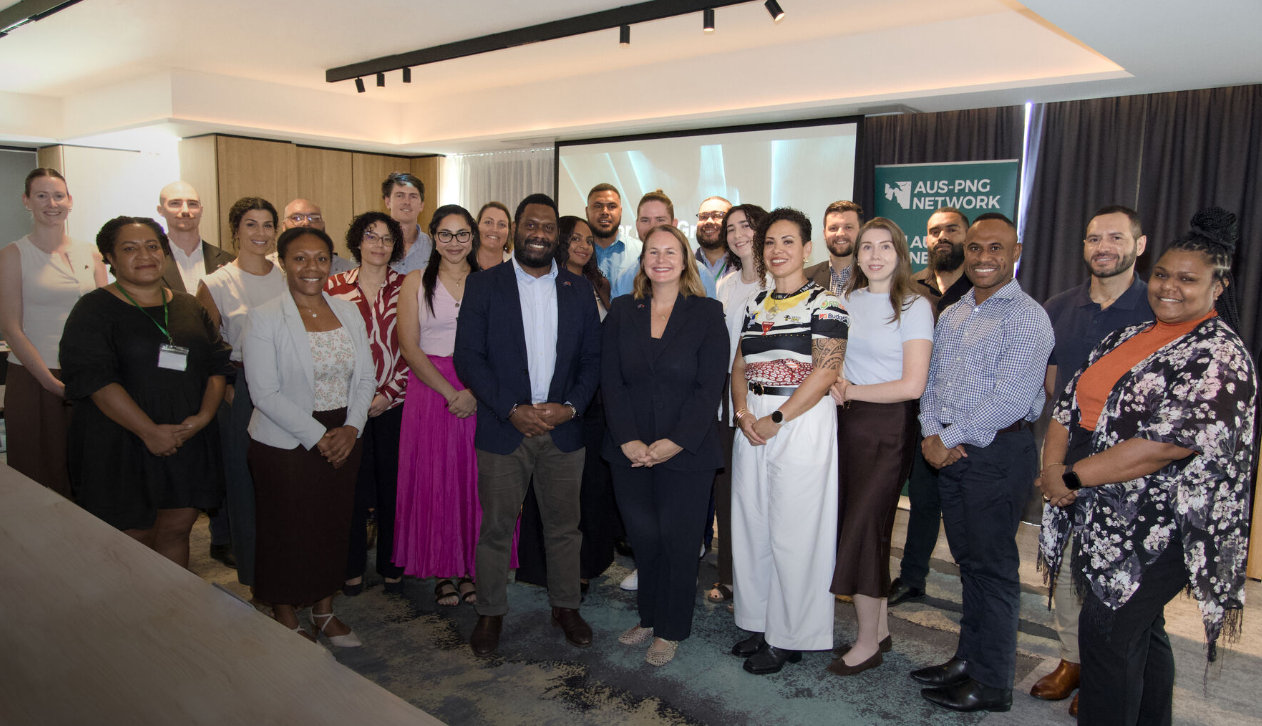
We also heard about the scale of trade between Queensland and PNG, with billions of dollars in exports and imports flowing between both economies. Trade and Investment Queensland (TIQ) shared how PNG remains one of Queensland’s most important trading partners, while DFAT representatives spoke about efforts to deepen economic integration through labour mobility, education pathways and regional agreements such as PACER Plus.
A major topic throughout the week was entrepreneurship and the challenge of supporting SMEs in PNG. Speakers discussed the so-called “missing middle”, where businesses often struggle to access investment or finance needed to grow. At the same time, there was strong optimism about PNG’s future, particularly its young population, growing business sector and untapped economic potential.
Another interesting discussion focused on sport diplomacy and the proposed PNG NRL team, the PNG Chiefs. Conversations looked at the wider economic and diplomatic impacts, including workforce development, tourism, business activity and regional engagement. The funding breakdown is also important to understand. While the headline figure is often reported as a $600 million package, it is not all going directly to the Chiefs. Approximately $290 million is expected to support team establishment and operations, around $60 million is directed toward NRL licence requirements and the final $250 million is part of the Pacific Rugby League Partnership. This supports grassroots development, academies and elite pathways across PNG, Tonga, Samoa and Fiji. From that Pacific partnership component, only $100 million of the $250 million of the funding is directed specifically to PNG, with the remainder going to the other three aforementioned countries. Many speakers agreed that sport can strengthen Pacific relationships in ways that traditional diplomacy sometimes cannot.
One of my biggest reinforcements from the Dialogue was the importance of listening more deeply to Pacific perspectives rather than approaching the region only through strategic or security lenses. Several speakers challenged Australians to better understand the role of faith, culture, relationships and community in Pacific societies. One comment that resonated with me was understanding the close links between church and politics in PNG, as with many Pacific countries these areas are closely connected and shape everyday decision-making.
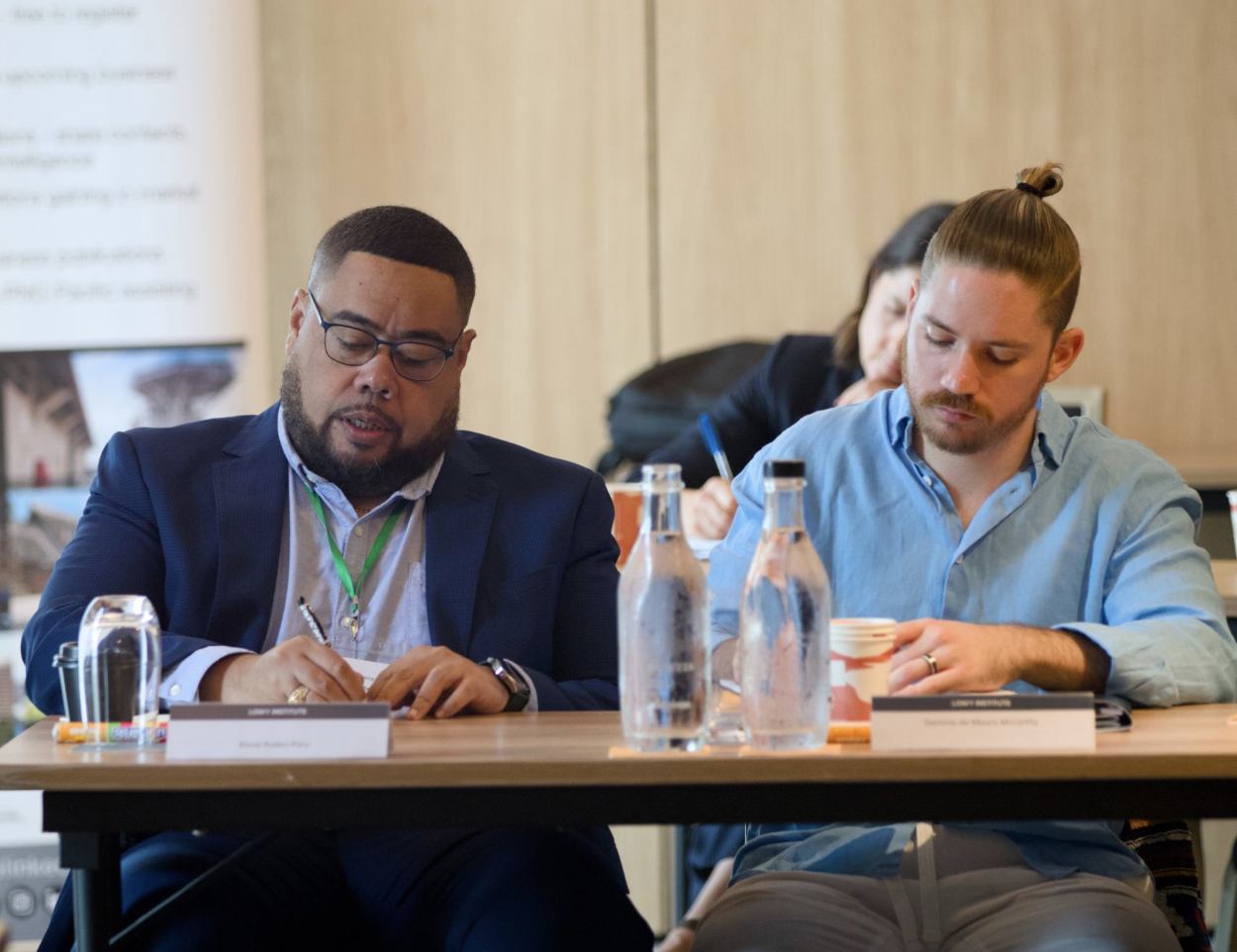
There were also honest discussions about the practical challenges PNG faces, including infrastructure gaps, electricity and water reliability, workforce development and barriers to doing business. However, what stood out most was the level of ambition and determination among leaders from both countries to continue strengthening the relationship in practical and long-term ways.
For me personally, the Dialogue reinforced how important northern Australia, especially Cairns, is becoming in Australia’s Pacific engagement. Port Moresby is the closest capital city to Cairns, just over a one hour flight away. Whether through education, tourism, labour mobility, sport, trade or diplomacy, the connections between Cairns and PNG are only becoming stronger.
I left the program with a greater appreciation for the complexity of the Australia–PNG relationship, but also with a sense of optimism. The future of the relationship will not only be shaped by governments, but also by emerging leaders, businesses, universities, churches, community organisations and everyday people building connections across both countries.
A big thank you to the organisers, speakers and fellow delegates for an insightful and genuinely thoughtful week of conversations.