
COVID-19 Business Impacts in New Caledonia and French Polynesia
The French Pacific Territories of New Caledonia and French Polynesia have both faced different but similar challenges from the COVID-19 pandemic. Businesses have had to respond to lockdowns, restrictions and changing market conditions to continue to remain viable, whilst diversifying their product offering. The pandemic has had a profound impact on these two islands, particularly for local business operators, although they have largely escaped the worst of the virus compared to France.
New Caledonia
New Caledonia’s economy is reliant on mining, with the island being amongst the top five nickel exporters in the world which contributes to 7-10% of their GDP. The mining industry represents around a quarter of salaried jobs on the archipelago, either directly or indirectly. However, despite only having a population of around 280,000, they have one of the highest levels of GDP in the Pacific, behind only Australia and New Zealand. New Caledonia’s principal import countries include France, Singapore, China and Australia, with their main export sources being China, South Korea and Japan. The public sector accounts for over 18% of GDP, which has seen a decline of 5% in the past 10 years. France also contributes to the economy by providing $1.5 billion AUD per annum in financial transfers, equating to 14% of GDP.
New Caledonia was impacted by two lockdowns due to the COVID-19, throughout March 2020 to April 2020 and then again from March 2021 to April 2021. The lockdown in 2020 began on the 24th of March and ended on the 19th April, forcing the closure of non-essential businesses. Following that, two weeks of easing of restrictions took place with a return to normal activities by the 3rd of May. Borders have remained closed since then, impacting the tourism industry which contributes to 5% of GDP.
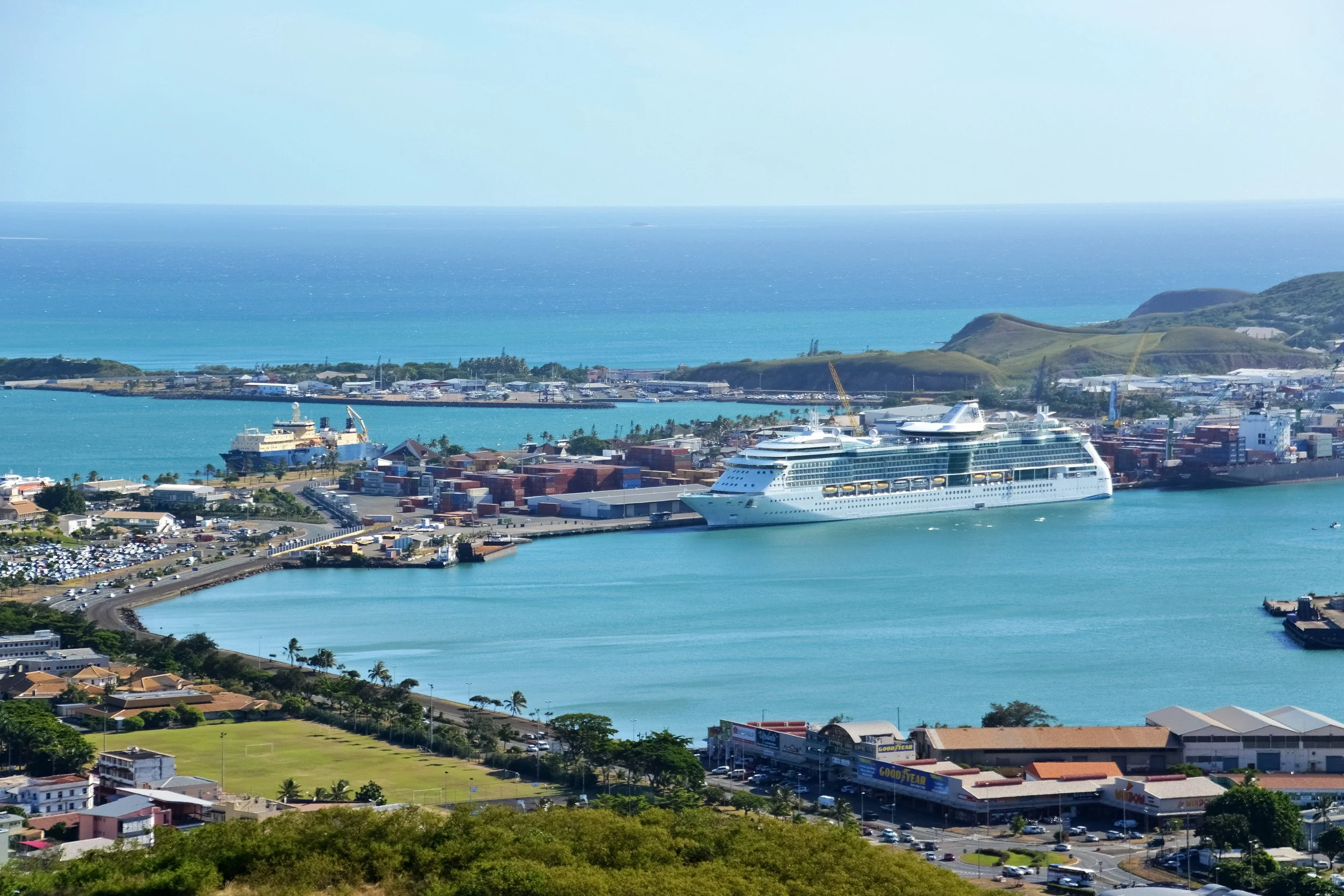
Photo by Jeremy Bezanger from Unsplash
Due to COVID-19, GDP is predicted to shrink by between 5.6% and 6.7%, which is estimated to be between 52 to 62 billion XPF. Businesses in New Caledonia have been supported by a fiscal stimulus of $66 million USD to assist their operations. The Chamber of Commerce and Industry is also providing support to local SME’s to allow them access to training and development. The real estate sector has also contracted, with Nouméa recording a 24% fall in sales, but prices have fallen by only 1.6%. The adoption of the supplementary budget in 2020 has also supported a loan to the value of $28.6 billion CFP ($282.2 million USD), to be provided by the French Development Agency and guaranteed by the state.
The New Caledonian Chamber of Commerce and Industry has reported that international border closures have significantly impacted the island economy. The sectors that have been the most affected include air transport, aviation and international tourism (including cruises). It is estimated that this has affected between 1500 and 2000 employees, with the flow-on effects felt by many small business operators throughout the archipelago. The Chamber of Commerce reports that support measures by the State, Government and provinces have all contributed to the recovery, along with modernised and proactive monetary policy.
The Pacific Trade Invest Pacific Business Monitor survey has recorded that in New Caledonia 79% of businesses have reported negative impacts from COVID-19, 63% of businesses have reported a decline in revenue and 79% of businesses are confident they will survive the pandemic. All of these statistics are higher than the average across the Pacific, highlighting the difficulty facing many enterprises on the island. Those businesses surveyed said that the top three challenges were not knowing how long the crisis will last (79%), the impacts of closed international borders (88%) and cash flow difficulties (97%). In terms of assistance, these businesses recognised that they needed financial support (38%), reviewed their financial position (33%), as well as accessing new markets (33%) and diversifying their business (25%). Overall, only 16% of New Caledonian businesses are confident of returning to pre-pandemic levels in 2021.
French Polynesia
French Polynesia has a similar population to New Caledonia of 280,000 although it is a much more tourism-reliant territory. The tourism-dominated service sector on the island accounts for 85% of total value added to the economy, with 17% of the workforce employed in this area. Financial support from the French State in the form of direct fiscal transfers also contribute to 23% of GDP.

Photo by Ryan Geller from Unsplash
The island had an initial lockdown in March 2020, with borders reopening in July 2020, one of the earliest countries in the world to reopen. Whilst this decision provided some assistance to the local economy, coronavirus numbers further increased and restrictions, curfews and limitations were further tightened. According to the Australian Pacific Security College, in 2020 French Polynesia had already lost an estimated USD $1.2 billion and 25,000 jobs due to COVID-19. Last year, France agreed to provide a USD $285 million loan to assist with social security payments. After closing their international borders again from February to May 2021, the territory has reopened to the tourists from June, with certain provisions required to visit.
The French Polynesian Chamber of Commerce and Industry has reported that although there are trends emerging, it is still too early to draw conclusions on the impact of the crisis for businesses in French Polynesia. Although 2019 delivered a net increase of 1700 new businesses, a decrease of 11% was recorded in 2020. There was also a 28% decrease in business closures between 2019 and 2020, due to the economic consequences of the lockdown.
The Pacific Trade Invest Pacific Business Monitor survey has recorded that 100% of French Polynesian businesses have both reported negative impacts from COVID-19 and reported a decline in revenue. Only 39% of businesses are confident that they will survive the pandemic. The top three challenges for enterprises operating on the island include not knowing how long the crisis will last (91%), impacts of closed international borders (84%) and cash flow difficulties (91%). The top four needs for local businesses are financial support (65%), reviewing their financial position (30%), accessing new markets (35%) and diversifying their business (30%). Only 13% of French Polynesian businesses are confident of returning to pre-pandemic levels in 2021, largely due to the ongoing travel difficulties.
In conclusion, the COVID-19 pandemic has had differing but similar consequences on New Caledonia and French Polynesia. Both territories have faced challenges over border restrictions, although the tourism-reliant economy of French Polynesia has been severely impacted. Businesses have been looking to diversify their product offering, however, this is challenging for those who are oriented towards the international tourism market. The prospect of the border reopening, potential travel bubbles and improving vaccination rates will provide some business confidence. Overall, the impacts cannot be understated, with many businesses across the two territories being unable to recover.