
Doing Business in the Pacific
The Pacific is an attractive business market for many Australian firms who are looking to expand internationally. Situated in close proximity geographically, Australia and the Pacific share strong ties across cultural, sport, diplomatic and defence cooperation.
The private sector is seen as playing a vital role in deepening people-to-people links across the region. These connections ensure a lasting relationship which is established through various initiatives including chambers of commerce, trade tours, formal agreements, international assistance programs and direct investment. Improving business opportunities through free and accessible markets can drive better development outcomes for the Pacific.
Australian companies operating in the Pacific span across the resources, shipping, manufacturing, transport, aviation and technology sectors. In 2017-18, Australia exported $591.1 million of agricultural products to the Pacific. Australia has traditionally been the largest trading partner in the Pacific, although China has now caught up. There are 4,400 Australian businesses doing business in Papua New Guinea, and 3,300 in Fiji.
Doing business in the Pacific can bring challenges due to instances of poor governance and corruption, poor business regulation environment, high production input costs and foreign exchange risks. Australian companies reassessing their business models and operating profiles have led to the withdrawal of Westpac from five countries in 2015 and ANZ exiting retail banking in Papua New Guinea in 2019.
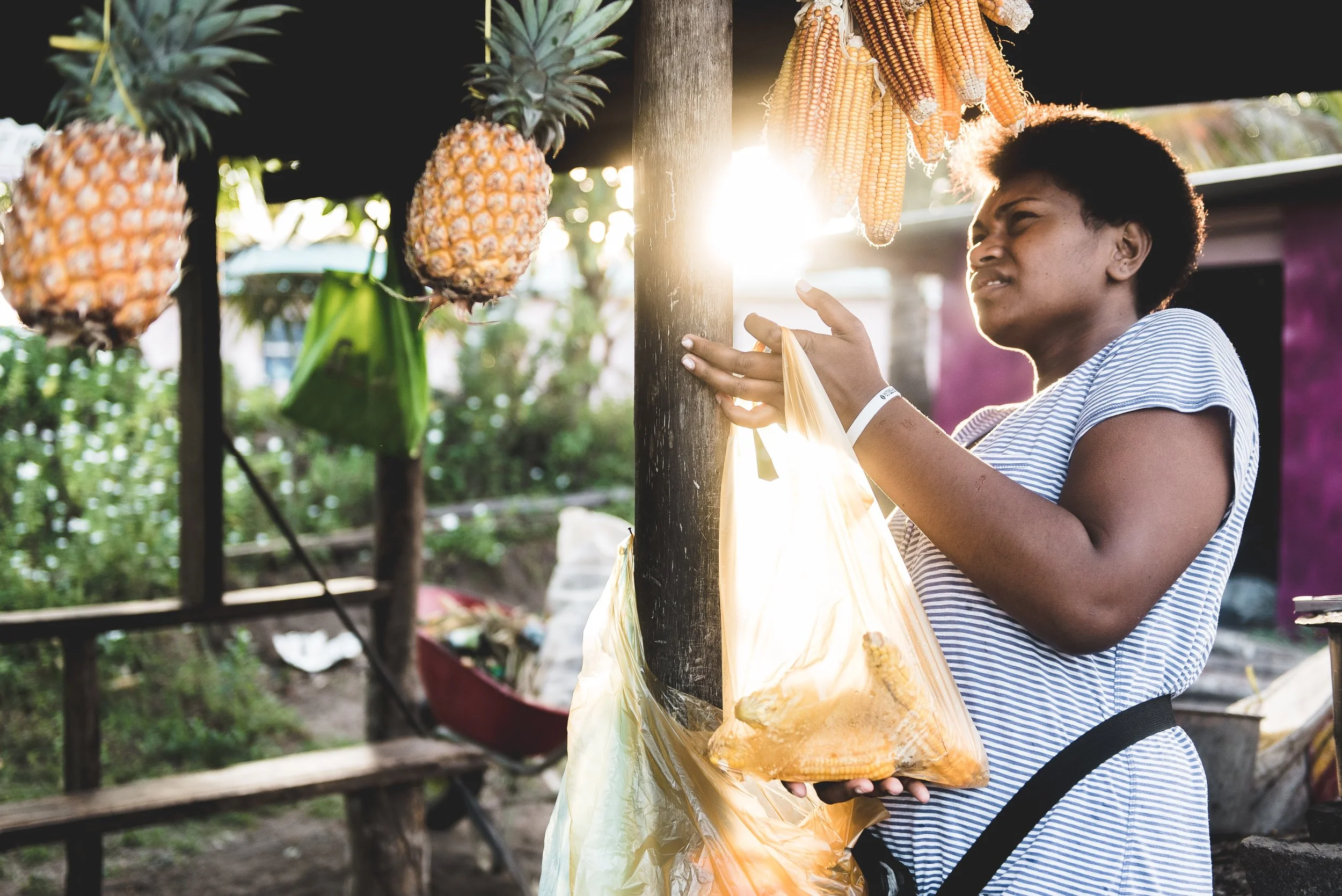
Image by Giorgia Doglioni
Papua New Guinea accounts for 80% of Australia’s total merchandise trade with Pacific island countries, with Fiji (8%) and New Caledonia (6%) being the next most significant partners. There are 12 other Pacific island countries that make up just 6% of Australia’s total trade with the Pacific. With competition in the region increasing, Australia currently represents approximately 18% of the total merchandise trade of Pacific island countries.
Kembol Kaikipae, Senior Business Development Manager at the Port Moresby Australian Trade and Investment Commission in Papua New Guinea, shared some insights.
“Currently there is a push to drive interest in exporting to the Pacific islands. New opportunity sectors are opening up especially in resources and energy, infrastructure, technology and tourism. Infrastructure development is a priority for many Pacific island governments. We are seeing their nations undergo tremendous changes to develop.”
The Australian Government has established several initiatives through the Australian Infrastructure Financing Facility for the Pacific and Austrade's Export Market Development Grants. Such programs foster private sector investment as well providing small to medium enterprises the opportunity to market their goods and services to the Pacific. Assistance programs during COVID-19 were also supported by the Pacific Trade Invest (PTI) Australia's Freight Assistance Package, giving relief to businesses in the Pacific from the economic crisis of the pandemic.
As Kembol Kaikipae from Austrade in Papua New Guinea highlighted, there are mechanisms in place to support Australian companies to engage in the Pacific.
“My role is to help Australian companies do business in PNG, by connecting them to business opportunities and partners with opportunities to export goods and services. It fundamentally contributes to Australia’s economic prosperity. Austrade has offices in PNG, Fiji, as well as New Zealand. We work together and collaborate to find business opportunities in the region and match these opportunities with Australian companies.”

Image by Vika Chartier
Each country operates in a unique regulatory and political environment, along with diverse cultures, language and economic challenges. There is a strong need for building individual connections with the local business community in these islands to better understand their individual needs. Ultimately, Australian business expertise can be harnessed for mutually productive outcomes if trade frameworks are optimised by governments.
Kembol Kaikipae from Austrade also shared how strong links can deepen collaboration.
“Pacific island countries are rich in history and cultures. Australia has geographic, trade, investment and sport links with the region. Connections are very important. They are valued in the Pacific. When you have good relationships, you will continue to build a network of people around you.”
For Australians who are wanting to better understand the region’s future potential and challenges, there is no better way than by visiting these countries in-person. Spending a significant portion of time to invest in establishing strong relationships will not only open one’s eyes to the rich cultures and traditions, but also drive more productive business outcomes. After all, one might say that relationships are the ‘currency’ of the Pacific.