
Spotlight: Wallis and Futuna
They are the tiny volcanic islands located over 16,000 kilometres from France offering natural beauty combined with rich culture, all undiscovered by tourists. Wallis and Futuna are a self-governing overseas collectivity of France situated in the west-central Pacific Ocean, within Polynesia. The three main islands of Uvea (Wallis), Futuna and Alofi make up Wallis and Futuna, as well as several other small islets, combining for a total land area of 142km2. The capital is Matâ'utu, located on Uvea.
From around 850 to 800 BC, the first human inhabitants arrived on the island from the Lapita culture. Boats that travelled between Fiji and Samoa used the islands as a stopover point. Around 1400 AD, Samoan sailors reached Futuna whilst Tongans settled on Uvea (Wallis). By the time Europeans arrived in the 17th century, the three kingdoms of Uvea, Alo and Sigave had already been established. Dutch explorers Jakob Le Maire and Willem Schouten sighted the islands during 1616, before Captain Samuel Wallis sailed to Uvea in 1767, despite never setting foot on the ground. By the 1830s, French Marist priests had arrived on the islands as missionaries.
In the 1840s, the missionaries wrote to France to request protection, but this didn’t occur until in 1887 for Wallis and 1888 for Futuna. At the time, the islands were put under the authority of the French colony of New Caledonia. In 1917, the three traditional kingdoms were annexed by France and became integrated into the Colony of Wallis and Futuna. Wallis and Futuna were then the last overseas islands to join the French Republic, after a vote in 1959 to become an overseas territory, which came into effect in 1961.
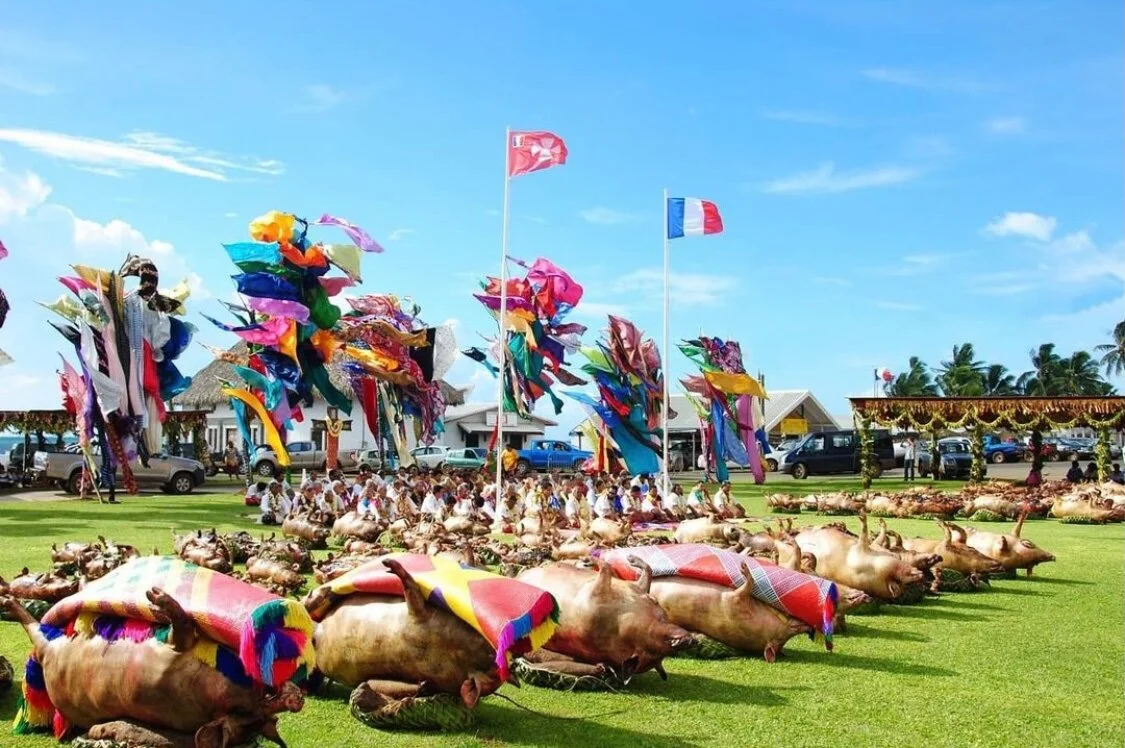
Photo by Rémi and Sandra Prat
They have a population of around 11,500 as of 2018, with 72.1% of inhabitants living on Wallis and 27.9% on Futuna. There are approximately 30,000 Wallisians and Futunans living in New Caledonia. Cultural, historical and linguistic links still tie Uvea (Wallis) with Tonga, whilst local folklore suggests Futunans have origins in Samoa. Both Wallisian (Uvean) and Futunan are Polynesia languages, which are their official languages, along with French.
Doing business in Wallis and Futuna has its challenges and rewards, as Paul-Émile Brial told me.
“The business environment in Wallis and Futuna is quite stable, many companies are created but many also fail and close down a few years later. This is due to bad management or lack of a network. The most resistant have big resources, however, we can note that these same structures started small.”
France, Singapore, New Caledonia, the European Union and Fiji are the top five largest trading partners for Wallis and Futuna. Australia is their seventh-largest trading partner, with imports totalling $4.85 million in 2018. Wallis and Futuna exports small amounts of seafood and arts and crafts. Due to their developmental status, Wallis and Futuna is the only French Pacific Territory eligible for aid, receiving support through the Australia Award Scholarships and the Direct Aid Program. Wallis and Futuna are a member of the Pacific Community, Pacific Island Development Fund, South Pacific Tourism Organisation, South Pacific Regional Environment Program and an associate member of the Pacific Islands Forum. The Australian Consulate-General in Nouméa (New Caledonia) is responsible for Australian affairs and relations in Wallis and Futuna.
The companies that are successful in Wallis and Futuna are those who can establish strong networks internationally. In addition, Paul-Émile Brial said,
“Small and medium-sized companies live from subcontracting and versatility, in fact to survive a company must be versatile in one field or even offer multiple services. The most solid organisations are retail traders, building and public works professions and raw materials for construction. The service companies are limited, not by lack of means but by lack of knowledge and network as mentioned above because many of them are family businesses. Indeed, the culture and traditions at the local level mean that company managers delegate very little of the administrative and ancillary tasks.”
Wallisian and Futunans are recognised French citizens who can live in France and can vote in the local and national French elections. Wallis and Futuna have a Prefect, who represents the President of the French Republic as the Head of State. They administer most sectors of the government but are not involved in customary matters. Wallis and Futuna have one Senator in the French Senate and one Member of the French National Assembly. Locally, Wallis and Futuna have a Territorial Assembly, with 20 democratically elected members who serve five-year terms. In addition, there are municipal councils, one in Wallis and two in Futuna. These are based on the traditional monarchies of the islands and operate similarly to a local council. France agreed to a statute in 1961 that allowed Wallis and Futuna to maintain their monarchies and co-exist with customary rights and French law. Every customary monarchy has a king who is responsible for managing land, familial disputes, as well as religious and customary ceremonies. These kings are remunerated by the French Government and aided by a prime minister and a chiefdom, comprised of village chiefs.
Mr Brial tells me that Wallis and Futuna has a bright future ahead.
“I would add that there are new perspectives with the arrival of a digital and connected generation. Also, young graduates who are establishing themselves. The economic future has potential, but we must persevere.”
To this date, Wallis and Futuna has only ever had two cases of COVID-19. In 2018, only 100 tourists travelled there. If you’re looking to visit to Wallis and Futuna once borders are open, it is a three-hour flight from New Caledonia or just over an hour from Fiji.
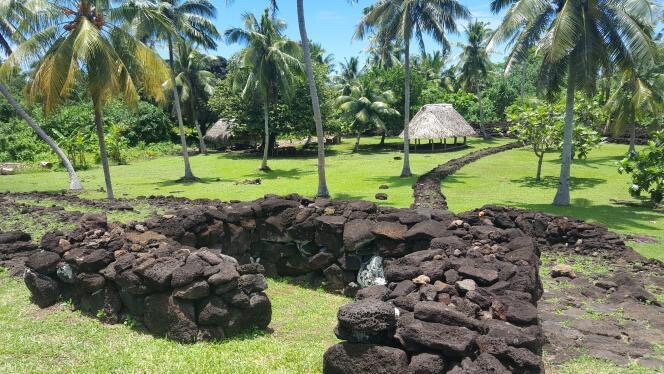
Photo by Rémi and Sandra Prat