
Second Referendum on Independence in New Caledonia
New Caledonia held its second referendum on independence on Sunday 4 October 2020. The result delivered a majority “Non” vote, with 53.26% of voters wanting to stay part of France and 46.74% voting in favour of independence. 180,000 people were eligible to cast their vote in the referendum as part of the special electoral roll. The same question was posed at the ballot box as in 2018: “Do you want New Caledonia to achieve full sovereignty and become independent?” The result saw a 3.4% swing towards the YES camp, with voter participation reaching an all-time high of 85.69%, up from 81.01% in 2018.
The Matignon Agreement was signed back in 1988 by Jean-Marie Tjibaou and Jacques Lafleur, after a series of discussions and negotiations following the civil unrest of Les Événements. The agreement paved the way for a ten-year period of peace. Following this, the Nouméa Accord was signed in 1998, which would set out a twenty-year transition period to allow New Caledonia a possible three referendums on independence.
The vote for 2020 was originally scheduled for 6 September, although it had to be pushed back to October due to COVID19. Controversies surrounded the referendum, with independence parties accusing the French government of failing to remain impartial. The newly formed alliance of anti-independence groups, known as Les Loyalistes, created a bloc to remain part of France. The French tricolore flag was approved to be used by political groups, which was banned back in the 2018 referendum, angering independence campaigners. The Parti Travalliste (Labour Party) advocated for the YES vote this time around, having previously abstained from the debate. Both the Caledonie Ensemble (Caledonia Together) and L’Éveil Océanien (Pacific Awakening) parties didn’t join the official independence or anti-independence hardliner groups, with Caledonie Ensemble running their own NO campaign. Whilst L’Éveil Océanien encouraged its supporters to go out and vote, they remained neutral on choosing a side.
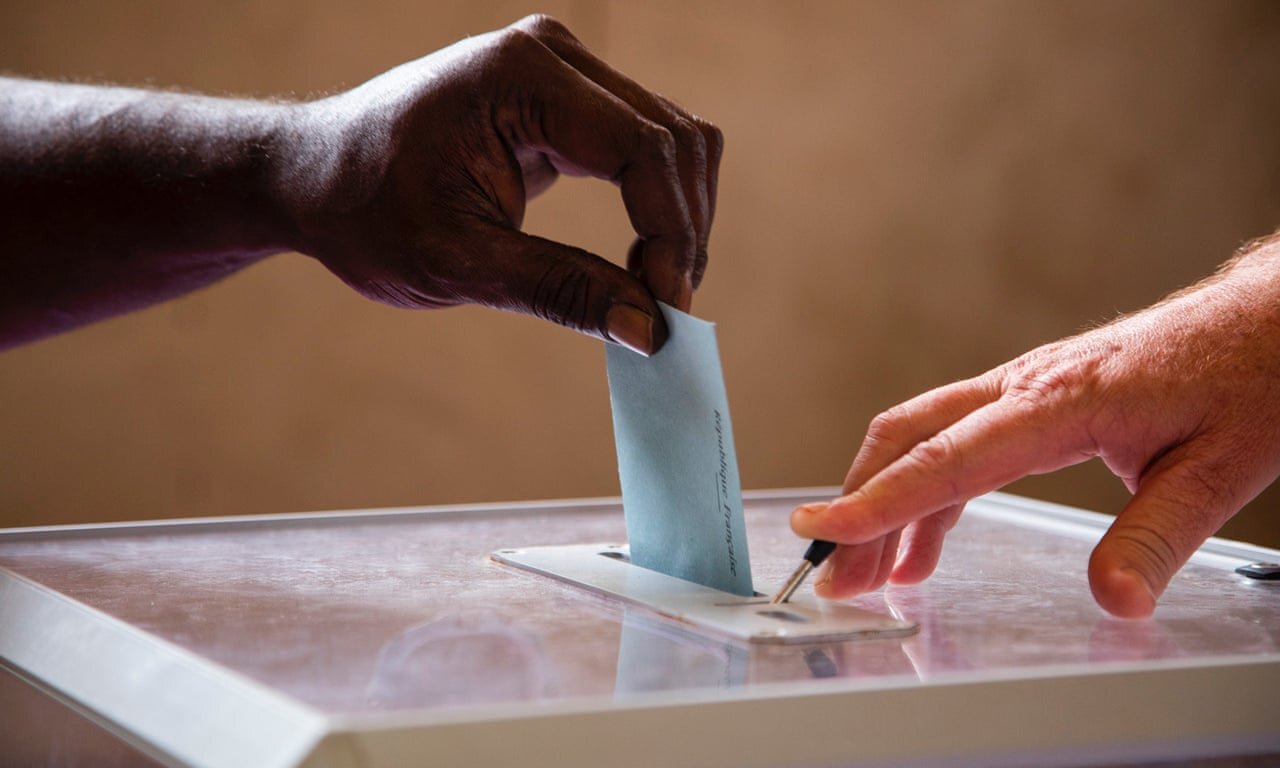
Photo by Dominique Catton
The outcome saw the number of votes between the YES and NO camps tighten from 18,000 in 2018 to less than 10,000 in 2020. This resulted in 81,503 votes for ‘Non’, with 71,533 votes for ‘Oui’. Around 14.3% of the electoral roll didn’t vote, equating to 25,881 people. The majority of abstentionists were in the Greater Nouméa areas as well as the Loyalty Islands. With the vote largely being split down ethnic lines, the independence strongholds of the North Province and Loyalty Islands recorded a YES vote of 77.8% and 84.3% respectfully. The Loyalists heartland of the South Province dropped from a majority NO vote of 74.12% in 2018 to 70.9% in 2020. The independence vote increased in 32 of 33 communes, with the NO vote only progressing on the island of Maré. The improvement in the YES vote was attributed to the strong turnout in the North and Loyalty Islands, where independence voters are the majority.
As Pierre-Christophe Pantz told me, an expert on New Caledonia’s referendum process, the result had two major surprises.
“It was the highest turnout (85.69%) among all the New Caledonian polls. For the record, the first had already been a record in Caledonian political history (81.01%).The second surprise, in my opinion, is the clear progression of the independence score (46.7% against 43.3% in 2018, that is +3.4 points) whereas this score had been relatively stable for about twenty years (+3 points in 20 years between 1999 and 2018). When we look in detail at the polling stations, we realise that this progression towards independence is essentially linked to the capture of abstentionists. The NO vote has also progressed at the territorial level, but it is declining in some communes of the Northern province, the East Coast and Lifou, mainly Kanak. It can therefore be deduced that there has been a moderate shift from the NO camp to the YES camp among the Kanak population.”
French President, Emmanuel Macron, expressed his pleasure with the result and said he welcomed the “mark of confidence in the republic with a deep feeling of gratitude”. The Australian Foreign Minister, Marise Payne, also commented on the referendum, saying Australia “congratulates” New Caledonia on voting to “remain a part of France”. Meanwhile, the Melanesia Spearhead Group supported the independence movement.
The future of New Caledonia is difficult to forecast, as Mr Pantz said, with the option of a third referendum in 2022 under the Nouméa Accord.
“No one can predict it. If the YES side wins, it will be independence with a transition period that remains to be defined. And if it is NO, what is provided for in the Nouméa Accord remains rather vague: “If the answer is still NO (in third referendum), the political partners will meet to examine the situation thus created”. Nevertheless, a victory for the independentists should not make us forget that, counting those who do not have the right to vote in the referendum (around 36,000), those "theoretically" opposed to independence will still constitute at least half of the New Caledonian population. And it is the same thing if independence fails in the third referendum, a non-negligible part of the population, essentially Kanak, will still be viscerally attached to independence. This referendum, whatever the outcome, will not bring satisfaction to a large part of the population. On the contrary, it is likely to be a vector of tension and resentment on both sides.”
A possible third and final referendum will likely take place in 2022, with the Congress of New Caledonia needing to approve it by April 2021. Independence parties have the numbers and will push for another vote, whilst Loyalists are likely to reject the proposal. The French Overseas Minister is currently in Nouméa facilitating discussions between the two camps. Whether a future New Caledonia is independent or not, a dialogue between increasingly polarising sides will be required to develop a common vision for all and move forward together.